
Standard off-the-shelf industrial equipment serves a valuable purpose in manufacturing environments. However, a one-size-fits-all approach often creates more problems than it solves if your production line relies on precise surface preparation. If you are struggling with inconsistent finishes, frequent bottlenecks or safety concerns, your equipment may be the source of the issues.
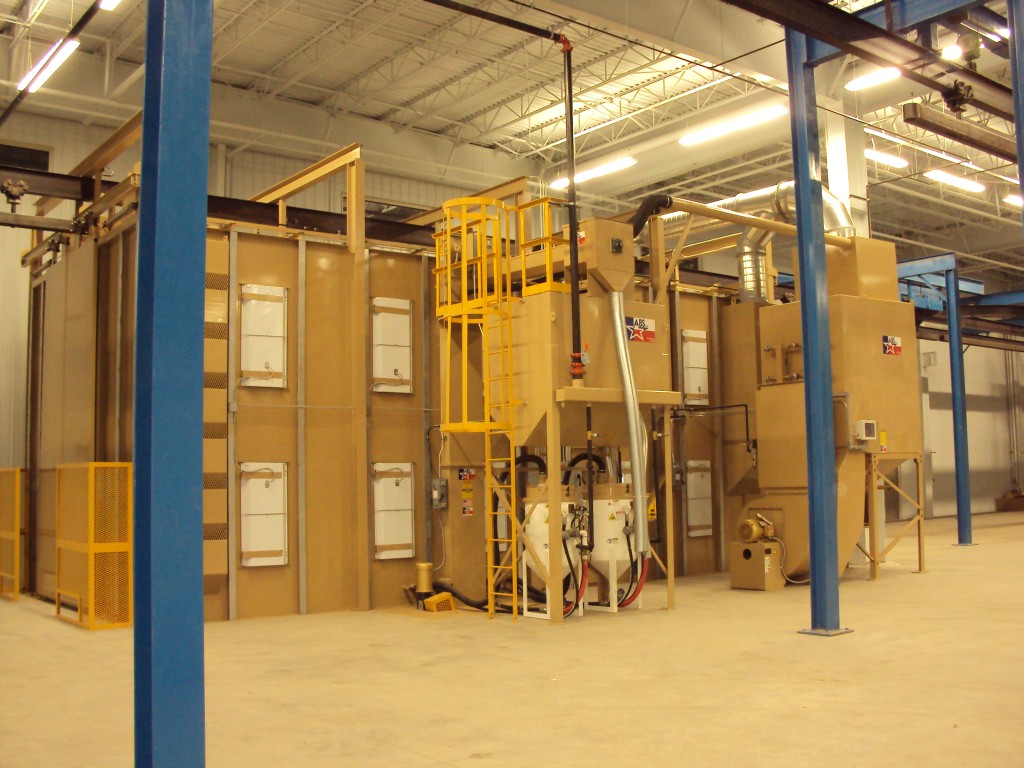
Designing a custom blast room for your unique process can streamline operations, especially if you handle complex parts or high-value throughput.
This guide explores considerations when planning a custom solution.
A custom solution is an investment, but the return is significant. A custom design transforms your blast operations from a necessary cost into a strategic advantage. Below are some benefits of tailored solutions.
Time is the most valuable resource on your production floor. Manufacturers custom-engineer an abrasive blast room with your specific throughput numbers in mind. By optimizing the layout to reduce material handling time and integrating automated recovery systems, you can increase the number of parts processed per shift. When the room works in conjunction with your operators, cycle times may decrease and capacity may increase.
Custom systems calibrate the environment, media delivery and pressure for your specific application.
Whether you are blasting aerospace components that require tight tolerances or heavy machinery that needs an aggressive anchor profile, a tailored system delivers repeatable results.
A custom design allows you to address specific hazards related to your unique process. That includes engineering ventilation systems that effectively capture dust generated by coatings and substrates, as well as designing ergonomic workstations that reduce operator fatigue. Customization ensures you meet or exceed Occupational Safety and Health Administration standards.
While the up-front cost might be higher, blast rooms are budget-friendly over time due to their long-term return on investment. Custom-designed rooms, optimized for efficiency, reduce waste in several ways. For example, better media recovery means you buy less abrasive and faster cycle times reduce energy consumption.
When you calculate the total cost of ownership over several years, a custom solution may be a financially sound decision.
Designing a custom room requires understanding blast room design principles to ensure every component supports your workflow.
A common mistake is sizing the room based solely on the dimensions of the largest part processed in the space. An effective design considers the entire operational envelope. You must account for an operator’s range of motion and the space required to maneuver parts safely and efficiently. If you use forklifts or rail systems, the room must accommodate their turning radii and load capacities.
Consider designing to accommodate your largest part while retaining enough flexibility for your day-to-day workflow.
The airflow requirements for your room depend on the material you remove and the abrasive you use. For example, stripping lead-based paint may require more robust filtration and airflow monitoring than removing simple rust.
OSHA 1910.94 requires an exhaust ventilation system to create a continuous inward airflow at all openings. It also mandates baffles to minimize dust escape. A custom design calculates the exact cubic feet per minute needed to maintain a cross-draft or down-draft airflow that pulls dust away from an operator’s breathing zone. This engineering ensures you remain compliant while maintaining excellent visibility for quality work.
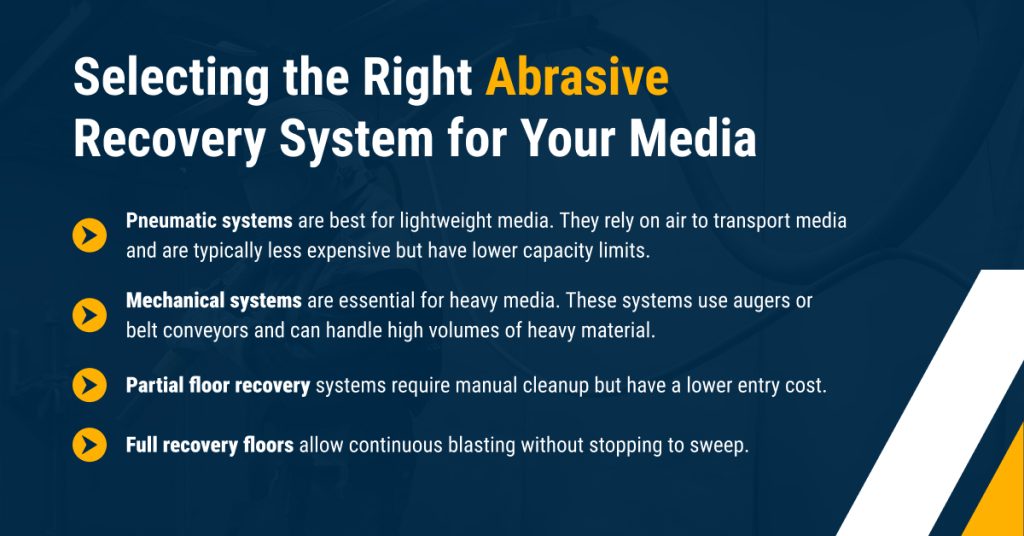
The efficiency of your operation relies on how quickly you can recycle media. While the choice of recovery system depends on media type and budget, some options include:
Selecting an abrasive is as critical as the equipment. Different types of media determine the speed of cleaning and the resulting surface profile or anchor pattern. Consider the following when choosing.
In specialized finishing processes, operators may encounter media glazing. This phenomenon occurs when the abrasive media becomes loaded with contaminant from the workpiece or wears down to a smooth, ineffective state.
When media glazes, it stops cutting and starts rubbing, which generates excessive heat and can polish the surface rather than etch it. Your custom system should include methods to prevent this.
Entrances and exits often create bottlenecks in blast room design. A custom solution allows you to integrate material handling directly into the room’s structure. Here are examples of what’s possible within a tailored blast room project.
Sandblasting rooms are a significant capital asset. To safeguard your investment, consider a proactive maintenance plan.
Regular upkeep includes:
The lining protects the steel shell of your machine from corrosion caused by abrasion. For systems using vibratory bowls or lined cabinets, knowing when to service the lining is essential.
If you’re looking to maximize efficiency through precise and safe operation, you need a partner who can think outside the box. A custom abrasive blast room can help you solve your specific production challenges. Finishing Systems provides turnkey solutions for various industries. Our expertise spans the full range of finishing equipment — from custom air-blast rooms and recovery systems to high-volume wheel-blast machinery.
As an end-to-end supplier, our on-staff technicians are available for installation and service.
Contact us today to start a conversation about your next project.