
Manufacturing professionals confront a persistent challenge. Managing specialized finishing processes in-house requires significant capital investment, floor space and technical expertise. Outsourcing to a dedicated job shop offers a more strategic path forward for many operations, from small machine shops to large aerospace companies.
Job shops provide access to industrial-grade equipment, specialized knowledge and refined processes without the overhead of ownership. Whether you need abrasive blasting, vibratory deburring or wheel blast services, clarity about a finishing partner’s capabilities supports better sourcing decisions.
This guide breaks down the different types of finishing services offered through job shops, the operational advantages of outsourcing and the quality standards that protect your supply chain.
Metal finishing job shops deliver a range of specialized processes that prepare, clean and refine component surfaces. The comprehensive services available through dedicated providers deliver capabilities that would otherwise require substantial equipment investments and floor space. Each finishing method offers distinct advantages depending on part geometry, material composition and the desired surface characteristics.
Abrasive blasting propels media at high velocity against a component surface to remove contaminants, create texture or prepare substrates for coating application. This process excels at removing rust, scale, old paint and mill scale from metal parts. The technique works across multiple applications.
These abrasive blasting services accommodate diverse part sizes and configurations, from small parts processed in cabinet systems to large assemblies and structural elements handled in dedicated blast rooms. Job shops maintain various abrasive media to match specific application requirements. The choice of media, from aluminum oxide to glass bead to steel grit, depends on substrate material and desired surface finish.
Vibratory finishing uses controlled oscillation to tumble parts with ceramic or plastic media in a contained bowl or tub. Its continuous motion creates a uniform surface treatment across all exposed faces of a component.
This method removes burrs left by machining operations, reduces stress concentration points that can lead to fatigue failures and creates consistent surface finishes. Parts emerge with improved cosmetic appearance and functional characteristics.
This vibratory deburring and polishing approach works particularly well for high-volume production runs of smaller components. Batch processing lets you complete multiple parts simultaneously. Aerospace components, automotive fasteners and machined hardware all benefit from this efficient finishing approach.
Wheel blast systems use centrifugal force to propel abrasive media through a rotating wheel assembly. The high-speed impact removes burrs, scale and surface irregularities from metal components.
This automated process delivers consistent results with minimal labor input. Parts move through the blast chamber on conveyors or rotating tables while media streams strike all exposed surfaces. The method effectively handles ferrous and nonferrous metals.
This wheel blast deburring method offers significant throughput advantages for medium to large production volumes. The automated operation reduces per-part processing time compared to manual methods. Industries manufacturing castings, stampings and fabricated assemblies rely on wheel blast technology for efficient surface preparation.
Beyond core blasting and deburring operations, job shops often provide complementary services that support complete finishing solutions.
Access to this range of capabilities means manufacturers can consolidate multiple finishing steps with a single provider, streamlining logistics, reducing handling and ensuring process compatibility across finishing stages.
The strategic advantages of partnering with a specialized finishing provider extend beyond access to equipment. Outsourcing transforms finishing from a capital-intensive internal operation into a flexible, scalable resource that adapts to production demands.
Industrial finishing equipment represents a substantial capital investment. A single automated blast system or large vibratory bowl can cost tens of thousands of dollars. Maintaining multiple systems to handle different part types and finishing requirements multiplies these costs.
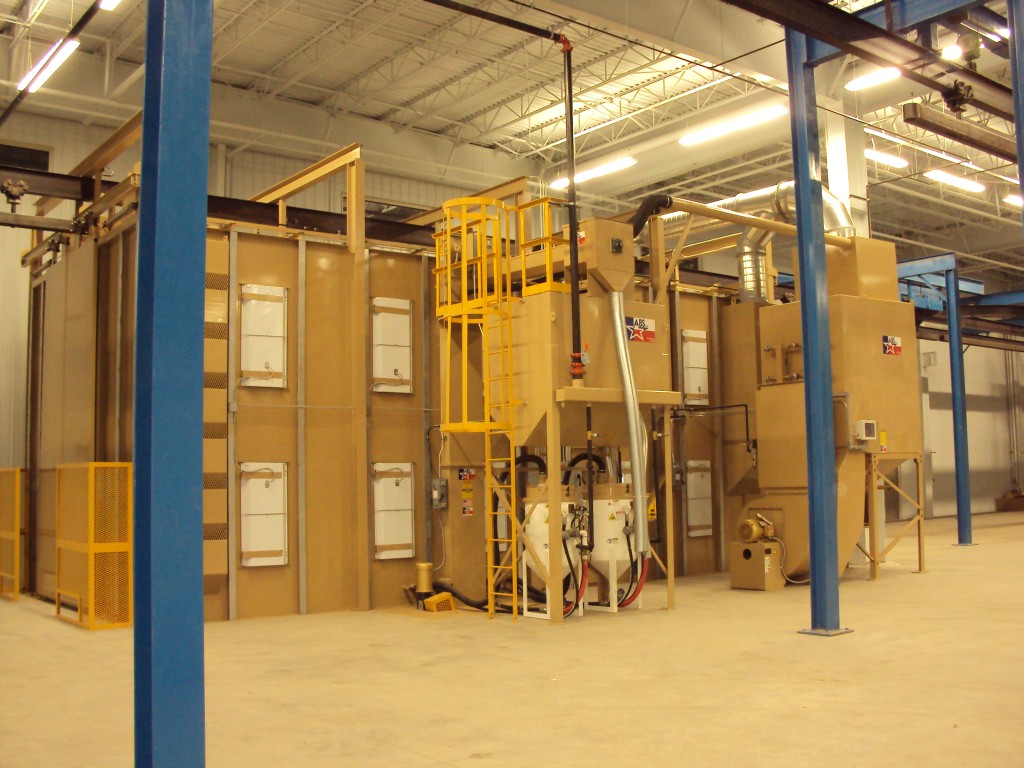
Floor space compounds the challenge. Dedicated blast rooms need proper ventilation, dust collection and material handling infrastructure, while environmental control systems add further expense. Available square footage often becomes a limiting factor for facilities considering this type of installation.
Job shops absorb these capital and space requirements. By maintaining state-of-the-art equipment and employing experienced technicians, they bring specialized expertise in media selection, process parameters and quality control methods that ensure optimal results across diverse applications.
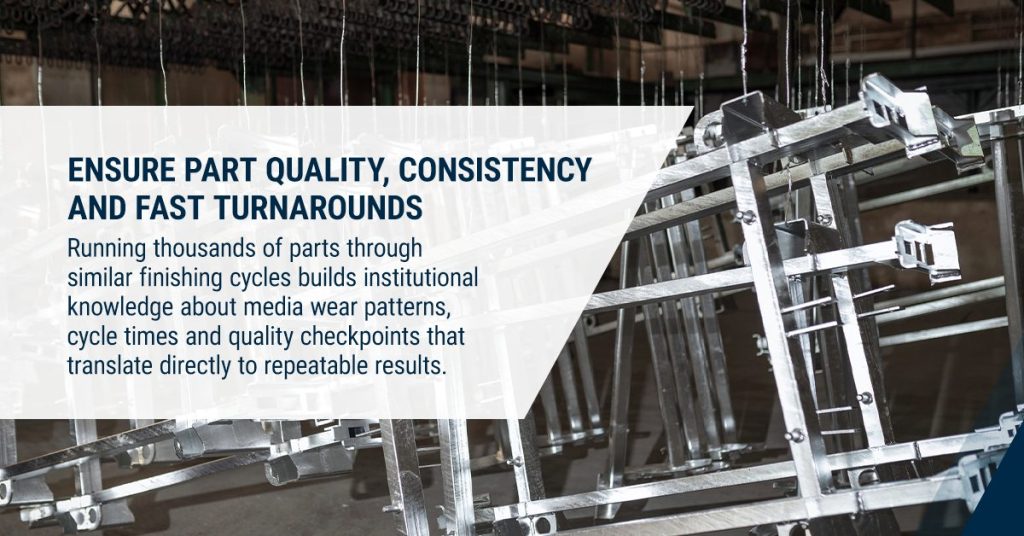
Dedicated finishing providers develop refined processes through repetition. Running thousands of parts through similar finishing cycles builds institutional knowledge about media wear patterns, cycle times and quality checkpoints that translate directly to repeatable results. Batch after batch, parts receive consistent treatment and surface finishes that meet specifications without the variability common to occasional internal finishing operations.
Established job shops also understand production schedules. They structure operations to accommodate customer deadlines and scale capacity during peak demand. Our clients speak to this service quality and responsiveness.
The visible costs of finishing equipment are only part of the total expense. In-house finishing carries ongoing operational burdens.
Outsourcing converts these variable, ongoing costs into a predictable per-part or per-batch expense. By handling waste disposal and equipment upkeep internally, the job shop allows manufacturers to focus resources on core production activities rather than supporting operations.
Partnering with a finishing provider that maintains formal quality practices and regulatory compliance reduces supply chain risk. Documented processes and adherence to industry standards provide assurance that parts receive consistent treatment that meets specification requirements.
Finishing Systems has sustained successful relationships with manufacturers across multiple industries for more than 50 years. This track record reflects consistent attention to customer requirements and operational discipline.
Metal finishing operations are subject to comprehensive environmental regulations. The Environmental Protection Agency establishes standards for wastewater discharge, air emissions and waste handling in 40 CFR Part 433. These federal requirements set baseline performance standards that protect water quality and public health.
Compliance requires ongoing monitoring, recordkeeping and facility management practices. Job shops that maintain proper environmental controls demonstrate operational maturity and reduce the risk of supply disruptions caused by regulatory violations.
Industry standards provide additional quality benchmarks. Organizations like ASTM International publish standards that define testing methods and performance criteria for metallic coatings and surface treatments. These specifications guide process development and quality verification.
When evaluating potential finishing partners, understanding their approach to regulatory and technical standards helps you assess risk and ensure finished components meet both functional requirements and compliance obligations.
Finishing Systems’ 24,000-square-foot facility houses a comprehensive range of equipment, from vibratory finishers to wheel blast systems, backed by a team with decades of hands-on expertise.
We understand the tight deadlines, strict quality requirements and other pressures procurement managers and engineers deal with, and we deliver consistent results and responsive service.
When you’re ready to discuss your project, contact us for a quote and let our team guide you to a solution.