
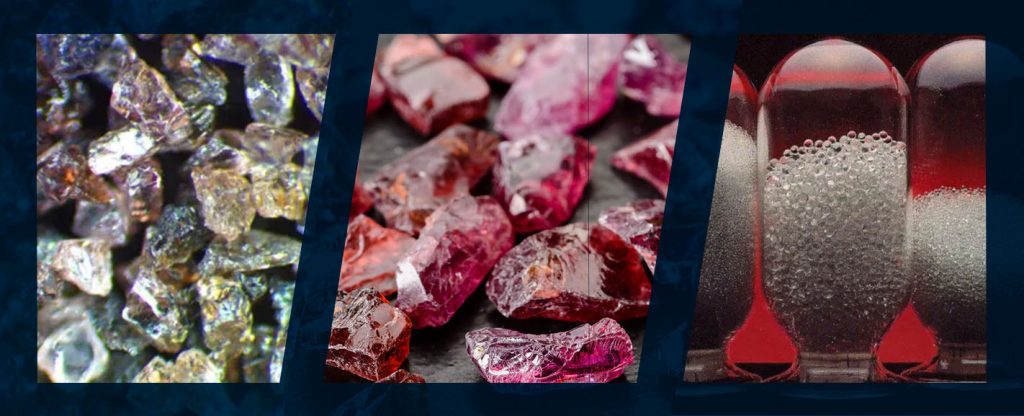
There is a wide range of abrasive materials on the market, and choosing the best one for your projects can be challenging. Three of the most common abrasive media are aluminum oxide, garnet and crushed glass. Learn the key properties and best use cases for each so you can maximize the efficiency and quality of your operations.
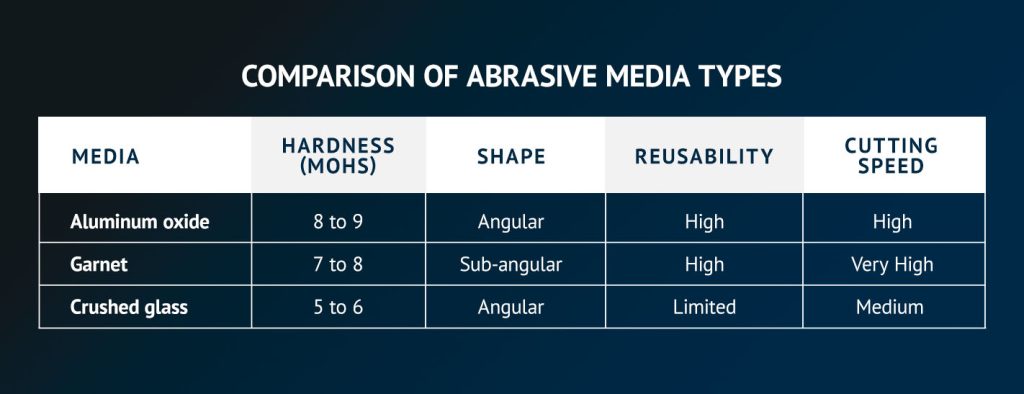
Aluminum oxide, garnet and crushed glass are all effective forms of abrasive media. They all share similarities in their angular shape and reusability. Their key differences are in their hardness, which is measured using the Mohs hardness scale. This scale measures the scratch resistance of materials from 1 to 10, with 10 being as hard as diamond. The harder the material, the more it will scratch the surface.
| Comparison of abrasive media types | ||||
|---|---|---|---|---|
| Media | hARDNESS (Mohs) | sHAPE | Reusability | Cutting Speed |
| Aluminum oxide | 8 to 9 | Angular | High | High |
| Garnet | 7 to 8 | Sub-angular | High | Very high |
| Crushed glass | 5 to 6 | Angular | Limited | Medium |
Aluminum oxide is a hard and durable abrasive blasting material made synthetically by extracting alumina from bauxite. The standard type of aluminum oxide is virgin brown-fused, but there are also other types, including a purer white form with a greater concentration of alumina.
The best uses for aluminum oxide as an abrasive medium include:
One of aluminum oxide’s main strengths is its versatility. You can use it in many applications and for a range of materials, including metal, glass, wood and marble. You can find it in various standard grit sizes, from 16 to 240, or mixtures.
The durability and hardness of brown aluminum oxide mean you can recycle it several times. Factor in this capability when comparing prices — the more reusable the abrasive material, the less you’ll need to buy for a job, bringing down the overall cost. Aluminum oxide can have a larger upfront cost compared to garnet or crushed glass, but its increased reusability can reduce the cost per square foot of preparing a surface overall.
Garnet is a naturally occurring mineral and is a popular abrasive in many industries. It is mined in various places throughout the U.S. and is a nontoxic alternative to sandblasting. Garnet is another versatile abrasive material for cleaning and preparing surfaces.
The most common applications for garnet abrasives are:
Garnet’s nontoxic and inert nature means it can be used outdoors with minimal environmental impact. Since it breaks less easily, garnet can also be safer to work with, as it tends to produce very little dust.
In terms of hardness, garnet is strong enough to perform most abrasive tasks effectively. Due to its high density, it has a fast cutting speed. Since garnet is not as hard as aluminum oxide, you may not be able to reuse it as often.
There have been links between garnet sand and effects on lung health similar to silicosis. According to OSHA guidelines, you can minimize these risks when you use garnet abrasives properly, like delivering them with water or having proper ventilation and breathing apparatus in place.
Made from 100% post-consumer materials, crushed glass is a heavy-duty abrasive. Available in coarse to extra-fine sizes, this versatile medium is suitable for many different surfaces. Crushed glass differs from glass bead abrasives due to its more angular shape, which is better at tackling tough coatings and leaving a clean surface ready for finishing.
Crushed glass is most effective for the following applications:
Extra fine crushed glass excels in blasting aluminum, fiberglass and wood, while coarse particles are effective at removing rust.
Made from old glass bottles and jars, crushed glass abrasives can be a more environmentally friendly option for blasting. Using 100% recycled materials decreases demand for mineral abrasives or slag, which preserves natural resources. Glass is also nontoxic, as it is made from silica, which is a natural compound that does not leach into the ground like plastic.
Crushed glass’s high friability makes it less reusable than garnet or aluminum oxide abrasives. This property also means it can create more dust if not used in a wet system. Finer grains of crushed glass can leave metals with a cleaner, brighter finish than slags or mineral abrasives.
The lower density of crushed glass compared to other blasting materials means you use less material and reduce disposal costs.
To achieve the best results when using abrasives, consider the most important factors for the surfaces you are working on and your business goals. Here is a quick breakdown of how aluminum oxide, crushed glass and garnet compare in different areas:
If you are choosing a product based on its cost, make sure your calculations go beyond the price of materials. Also factor in the consumption rate of abrasive materials, disposal costs and any additional costs you may encounter.
For a wide range of quality abrasive materials, you can depend on Finishing Systems. We have over five decades of experience in providing premium finishing solutions across many industries in the U.S., from industrial manufacturing to marine and yacht applications.
Browse our range of abrasives today, or call 800-582-3693 for expert advice on selecting the best blasting media for your job.